H2 Apprentice
A Course to Get You Started
This course is perfect for the person who isn’t 100% sure they are ready for the Level 1 Certification Courses. This course is an important confidence booster that you can complete the Level 1 Certification courses without as big of an investment.
Learn About MHI and Molecular Hydrogen!
The H2 Apprentice course covers the very basics, nothing too complicated! Learn about the certification program and get your feet wet with some of the basics. The first two modules are taken from Course 101 of the MHI Certification. Then we jump into a few basic chemistry principles. Finally, we dive right into what hydrogen is, what hydrogen water is, and some of its benefits. This is a preliminary course to prepare you for the Level 1 Certification Courses in case you are feeling like you want to test it out first.
What You’ll Learn
H2 Apprentice Course Breakdown
Learn about the Level 1 Certification
Maybe you want to just jump right in? Learn about the Level 1 Certification program here.
Not ready to take a course? Learn more by reading our articles
-
About Molecular Hydrogen (H2 Gas) | MHI | Basic Chemistry for Understanding Molecular Hydrogen | How to get molecular hydrogen
The Complete Guide to Molecular Hydrogen Therapy
Who is this guide for? This guide provides a high-level overview of molecular hydrogen therapy and links to deeper, topic-specific articles for readers who want more detail. Molecular hydrogen therapy is the use of molecular hydrogen gas (H2) for its potential biological effects. It is commonly administered by drinking hydrogen-rich water or inhaling low concentrations…
-
Hydrogen: An Emerging Medical Gas
INTRODUCTION Molecular hydrogen (i.e. H2 gas) is gaining significant attention from academic researchers, medical doctors, and physicians around the world for its recently reported therapeutic potential[1]. One of the earliest publications on hydrogen as a medical gas was in 1975, by Dole and colleagues from Baylor University and Texas A&M[2]. They reported in the journal Science that hyperbaric (8…
-
Calculating The Dose Of H2
What Is “ppm”? The ppm is an acronym for “parts per million”, a unit of measure that describes how much of one substance (called the “solute”) is dissolved in a sample of water (called the “solvent”). This is a measurement of concentration (or density), which can often be helpful in our daily lives. The ppm…
-
Hydrogen: Alternative Fuel To Alternative Medicine
(Also published on the Foundation for Alternative and Integrative Medicine website, September 2018) Hydrogen gas (H2) has been extoled for its use in “green energy” as an alternative fuel, but biomedical research over the past decade suggests it also has therapeutic biological benefits. For example, the preliminary 1000+ preclinical and clinical studies have reported hydrogen to have…
-
About Molecular Hydrogen (H2 Gas) | MHI | Basic Chemistry for Understanding Molecular Hydrogen | The Truth About Molecular Hydrogen – Myths and Facts, & Misconceptions
Common Myths About Molecular Hydrogen: What the Science Actually Says
What You’ll Learn Why So Many Misconceptions? Interest in molecular hydrogen has grown rapidly over the past two decades. As research has expanded, so has the number of products, websites, and marketing claims. Unfortunately, not all of those claims accurately reflect the science. Some misconceptions arise from misunderstanding chemistry, while others come from oversimplified marketing…
-
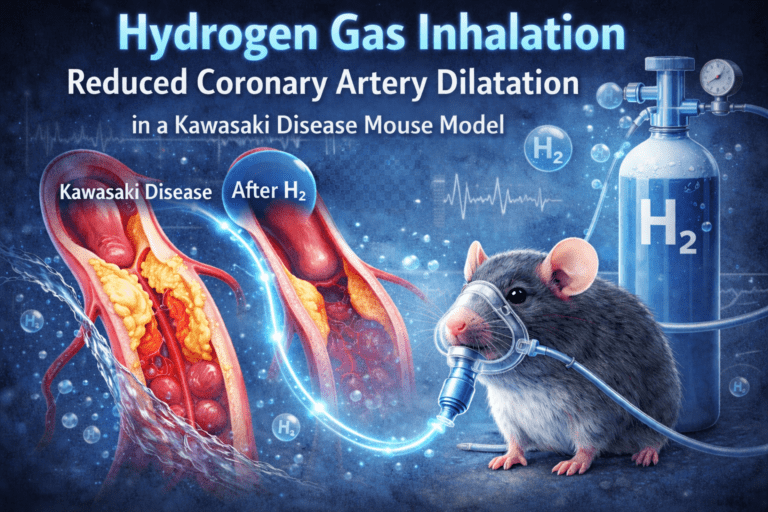
Hydrogen Gas Inhalation Treatment for Coronary Artery Lesions in a Kawasaki Disease Mouse Model
DOI:10.3390/life14070796 Introduction Molecular hydrogen (H₂) has been investigated for its potential effects on oxidative stress, inflammation, and cellular signaling pathways. Each month we highlight a study that contributes to the growing body of hydrogen research. This study examined the effects of hydrogen on coronary artery lesions in a Kawasaki disease mouse model. Study Overview Study…
-
Understanding Hydrogen Water Testing Methods
Introduction Molecular hydrogen (H₂) research continues to expand, with increasing interest in hydrogen-rich water as a potential tool for supporting redox balance and cellular health. However, one critical and often overlooked aspect is how hydrogen is measured. In this month’s highlight, we review key insights from a recent educational breakdown on hydrogen water testing methods,…