FOR IMMEDIATE RELEASE
December 2025
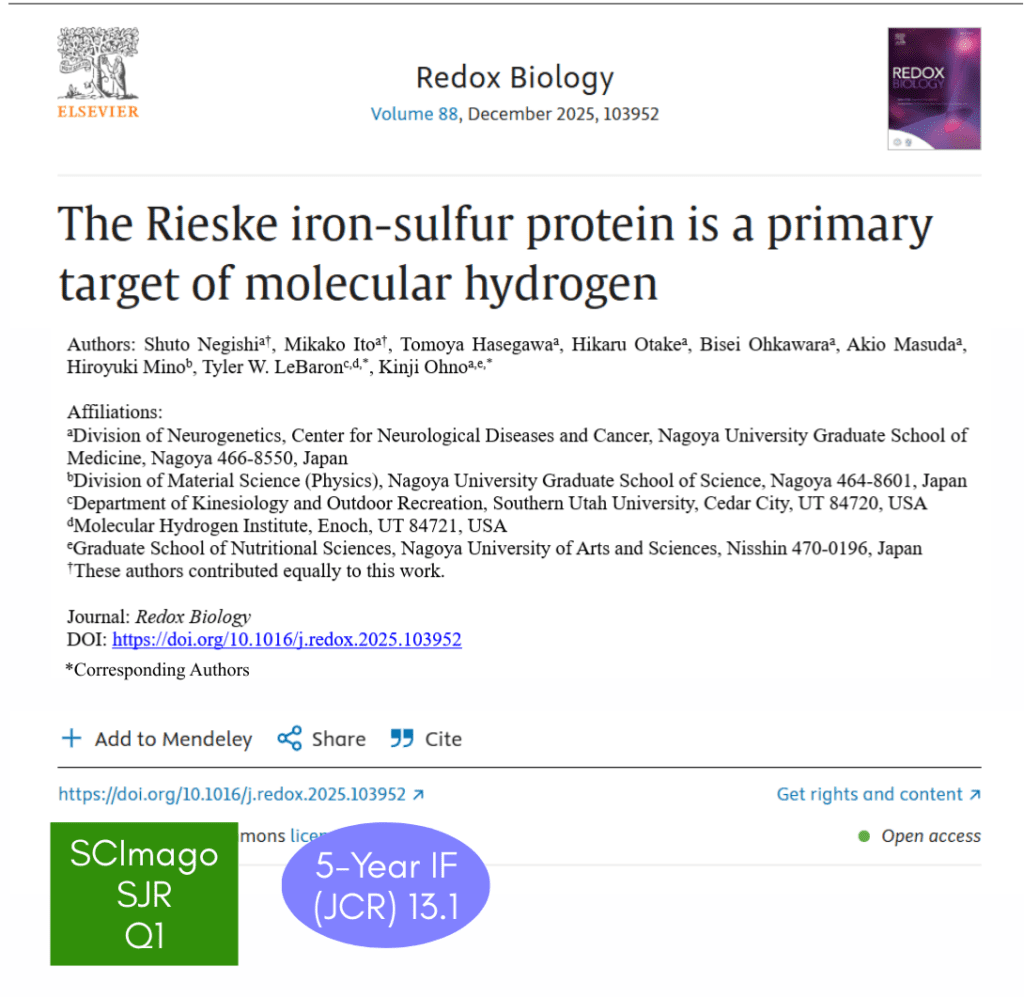
A groundbreaking paper published this week in Redox Biology reveals the first clearly defined molecular target of molecular hydrogen (H₂), reshaping scientific understanding of how hydrogen exerts its therapeutic effects. The study, co-authored by Dr. Tyler W. LeBaron of the Molecular Hydrogen Institute (MHI), identifies the Rieske iron-sulfur protein (RISP), a critical component of mitochondrial Complex III, as a primary target of H2.
Read It Here. Link to Nagoya University Press release here.
More press:
SUU News
St. George News

This discovery marks one of the most significant mechanistic breakthroughs in hydrogen research since the 2007 Nature Medicine publication that catalyzed modern interest in H2.
Key Findings
The research demonstrates that:
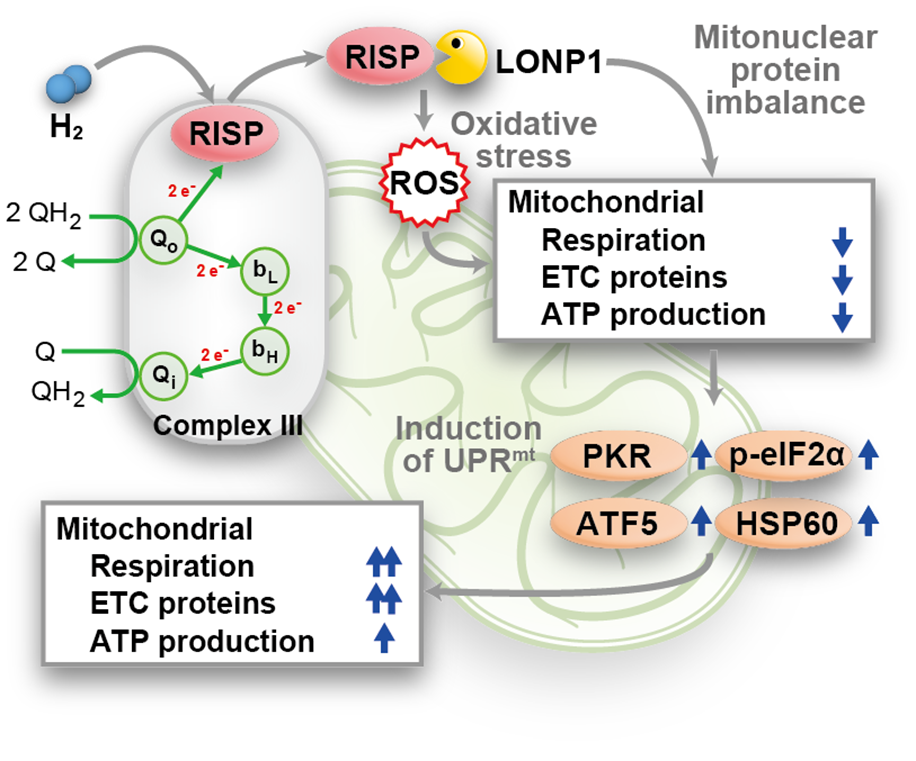
- Hydrogen specifically targets the iron-sulfur protein (RISP) in a manner that promotes its LONP1-mediated degradation within the mitochondrial electron transport chain.
- This interaction temporarily suppresses Complex III activity, signaling the cell that a stressor is present.
- The cell responds by activating the mitochondrial unfolded protein response (UPRmt) — a protective, hormetic pathway that enhances cellular resilience.
- Within hours, the cell rebuilds and upregulates RISP, restoring and improving mitochondrial function.
The study provides a unified explanation for many previously “paradoxical” observations in hydrogen research, such as both decreases and increases in oxidative markers, changes in mitochondrial potential, and sustained protective effects even after H2 levels return to baseline.
A Paradigm Shift
“These findings show that hydrogen is not a biologically inert byproduct of a healthy microbiome, as long believed,” said Dr. LeBaron. “It acts as a mitochondrial signaling molecule, similar to nitric oxide or hydrogen sulfide, but with its own unique evolutionary and biochemical profile.”
The researchers suggest that the iron-sulfur cluster in RISP may have ancient evolutionary roots, linking hydrogen’s effects to primordial mitochondrial systems once dependent on hydrogenases.
Implications for Exercise, Medicine and Research
This discovery:
- Moves hydrogen therapy beyond the “antioxidant hypothesis”
- Establishes a precise, testable mechanism for future clinical trials
- Explains hydrogen’s pleiotropic effects across hundreds of disease models
- Opens new avenues for mitochondrial medicine, exercise physiology, and redox biology
Identifying a primary molecular target allows researchers to build more rigorous studies, refine dosing strategies, and deepen clinical relevance,” said May Anderson, MHI Research Director. “This is the mechanistic clarity the field has been waiting for.”
“The Rieske iron-sulfur protein is a primary target of molecular hydrogen”
Published in Redox Biology, December 2025
Read it Here
About the Molecular Hydrogen Institute (MHI)
The Molecular Hydrogen Institute is a 501(c)3 science-based nonprofit focused on advancing the research, education, and awareness of hydrogen as a potential medical gas. MHI provides educational certifications, scientific resources, and global leadership in hydrogen science.
Press Contact:
info@molecularhydrogeninstitute.org
www.molecularhydrogeninstitute.org