DOI:10.3390/life14070796
Introduction
Molecular hydrogen (H₂) has been investigated for its potential effects on oxidative stress, inflammation, and cellular signaling pathways. Each month we highlight a study that contributes to the growing body of hydrogen research.
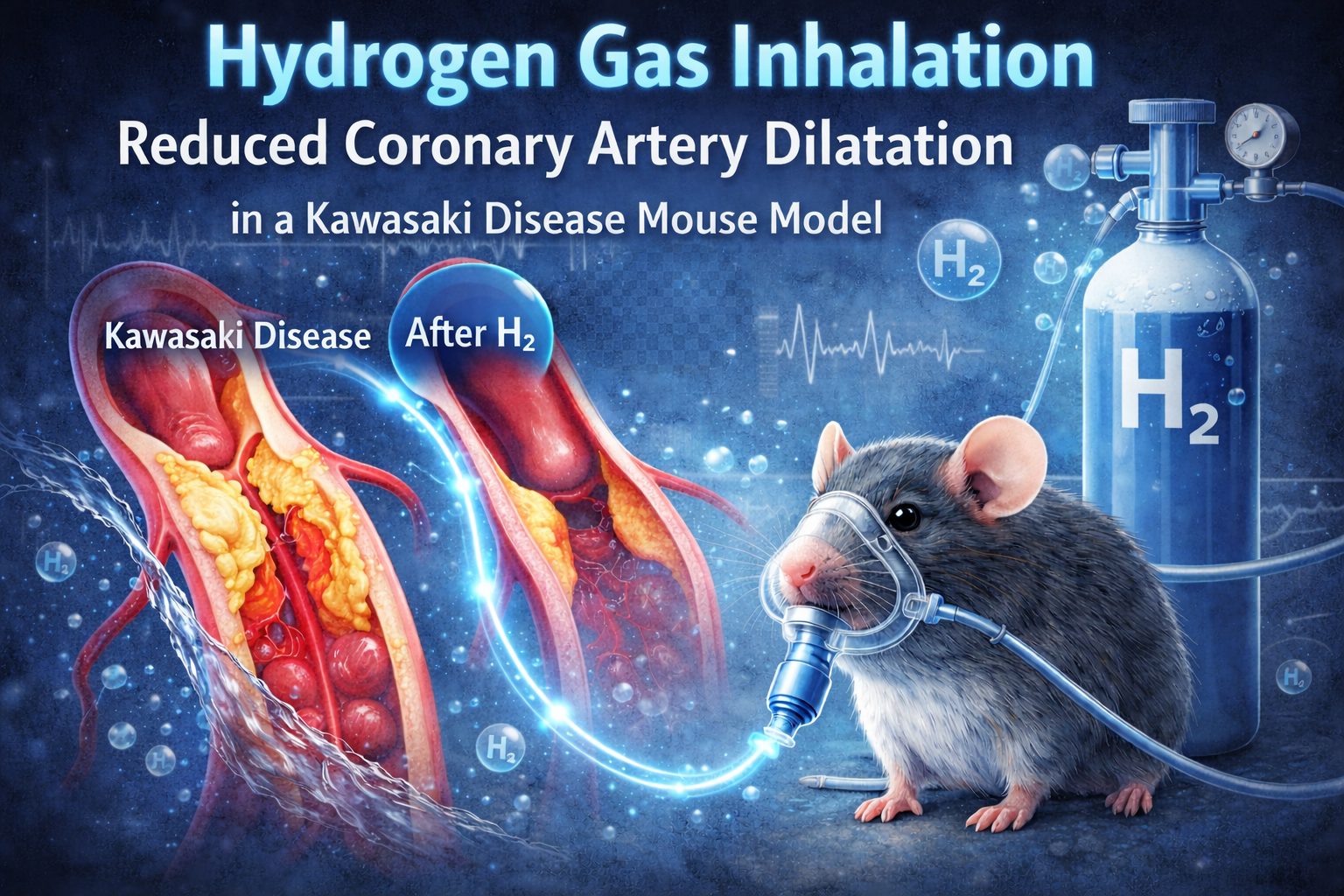
This study examined the effects of hydrogen on coronary artery lesions in a Kawasaki disease mouse model.
Study Overview
Study Title:
Hydrogen Gas Inhalation Treatment for Coronary Artery Lesions in a Kawasaki Disease Mouse Model
Authors:
Shih et al.
Journal:
Life, 2024
Study Type:
Animal study
Population:
Mice (LCWE-induced Kawasaki disease model)
Hydrogen Administration:
Hydrogen gas inhalation (73% hydrogen / 27% oxygen mixture)
Duration:
Up to 28 days post-induction of disease
Key Findings
Researchers observed several important outcomes:
• Hydrogen gas inhalation significantly reduced left coronary artery (LCA) diameter compared to untreated KD mice
• Hydrogen treatment significantly improved coronary artery Z scores (normalized measurements of dilation)
• LCWE-induced Kawasaki disease increased serum IL-6 levels, a marker of inflammation
• Hydrogen inhalation significantly reduced IL-6 expression
These findings suggest hydrogen may influence biological processes related to:
• oxidative stress
• inflammation
• mitochondrial function
• cellular signaling
Why This Study Matters
Hydrogen is unique among therapeutic molecules because of its small size and ability to diffuse rapidly into tissues and cells. Many studies suggest hydrogen may act as a modulator of oxidative stress and inflammation.
This study contributes to the growing literature exploring hydrogen’s potential role in vascular inflammation and coronary artery complications associated with Kawasaki disease.
However, as with all research, findings should be interpreted in context with the broader body of evidence. This study was conducted in an animal model, and clinical studies are required to determine relevance in humans.
Explore the Full Study
You can access the original publication here:
🔗 https://doi.org/10.3390/life14070796
Explore the MHI Research Database
MHI is building a comprehensive hydrogen research database designed to help clinicians, researchers, and educators easily navigate the scientific literature.
Users will be able to filter studies by:
• condition or disease
• physiological system
• delivery method
• biomarkers
• study type
👉 Explore the Hydrogen Research Database
Want to Learn More?
Members of the MHI Community meet monthly to discuss hydrogen research and ask questions directly with Dr. Tyler LeBaron.
Mechanisms Discussed in the Paper
Researchers proposed hydrogen may influence:
• reduction of reactive oxygen species (ROS)
• suppression of inflammatory cytokines such as IL-6
• modulation of inflammation-related pathways involved in vascular injury