Who is this guide for?
This guide provides a high-level overview of molecular hydrogen therapy and links to deeper, topic-specific articles for readers who want more detail.
Molecular hydrogen therapy is the use of molecular hydrogen gas (H2) for its potential biological effects. It is commonly administered by drinking hydrogen-rich water or inhaling low concentrations of hydrogen gas. While research is ongoing, studies suggest hydrogen may influence oxidative stress, inflammation, and cellular signaling. This guide explains what molecular hydrogen is, what current evidence shows, how it is used, and where important questions remain.
What you’ll learn
- What molecular hydrogen is
- What current research suggests
- Common delivery methods
- Safety considerations
- How to choose a quality product
- Where to learn more
What is Molecular Hydrogen?
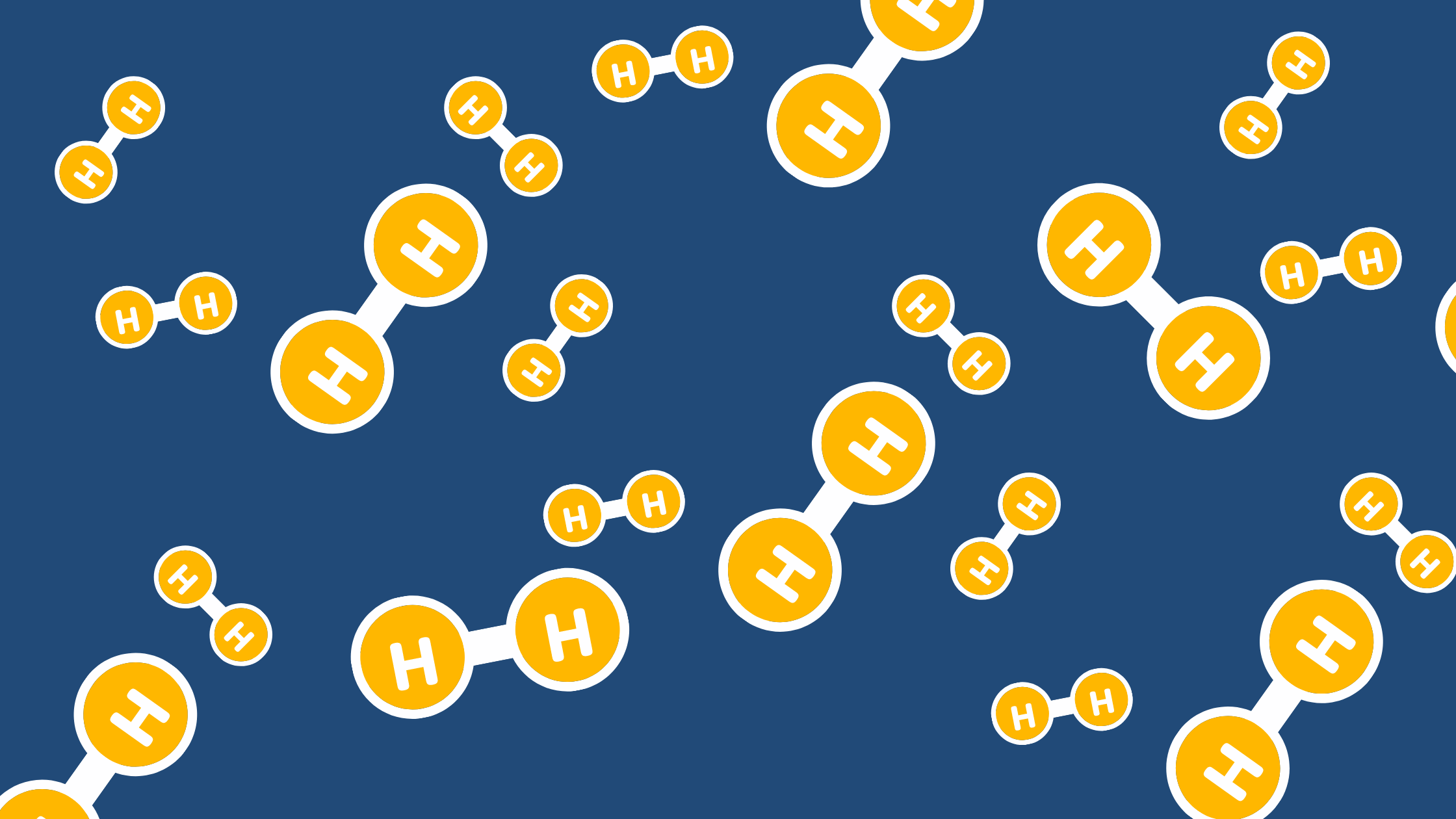
Molecular hydrogen is a gas that is being studied for its potential biological effects. Hydrogen gas is two hydrogen atoms and is the smallest molecule in the universe. These hydrogen atoms are bonded together with a nonpolar covalent bond, which means it is very stable and is also neutral. Hydrogen gas, in concentrations between greater than 4% and less than 78%, is highly explosive. However, the atmosphere contains only very small amounts of molecular hydrogen, only about 0.00005%. In comparison, the atmosphere contains about 21% oxygen gas and 75% nitrogen gas. Additionally, when hydrogen gas is dissolved in water, it is not explosive, similar to gunpowder being dissolved in water. It cannot explode in that environment.
Read more: Hydrogen: Alternative Fuel to Alternative Medicine
Read more: Dummies Guide to Hydrogen
Read more: How to Get Molecular Hydrogen
What Molecular Hydrogen is NOT
Molecular hydrogen is not a cure-all or miracle therapy, and it should not be viewed as a replacement for medical care. While research continues to explore its biological effects, claims that hydrogen cures diseases, works instantly, or guarantees specific outcomes are not supported by the scientific evidence.
Hydrogen is also not simply a “super antioxidant.” Although early studies highlighted selective antioxidant activity, current research suggests hydrogen primarily influences cellular stress responses and redox signaling rather than acting like a traditional antioxidant. (Read How Molecular Hydrogen Is Often Described — and What That Actually Means)
Finally, while hydrogen has a strong safety profile when used appropriately, it is not risk-free if misunderstood or misused. Proper administration, dosing concepts, and safety considerations, such as flammability thresholds, matter. Many important questions remain under active investigation, which is why education and evidence-based skepticism are essential.
Why Researchers are Interested
Over 3,000 scientific publications have explored molecular hydrogen. Human studies have reported promising findings in areas such as metabolic health, exercise recovery, inflammation, neurological conditions, and quality of life. However, many studies are small, short-term, or preliminary. While the evidence is encouraging, molecular hydrogen should not yet be viewed as an established treatment for most diseases.
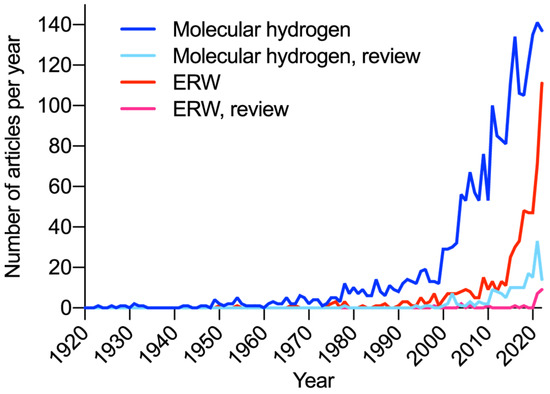
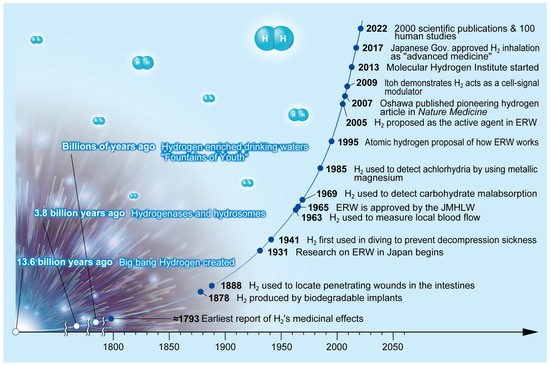
LeBaron, T.W.; Ohno, K.; Hancock, J.T. The On/Off History of Hydrogen in Medicine: Will the Interest Persist This Time Around? Oxygen 2023, 3, 143-162. https://doi.org/10.3390/oxygen3010011
Interest in molecular hydrogen (H2) has grown rapidly since 2007, when a landmark study published in Nature Medicine reported that hydrogen gas may selectively reduce harmful oxidative stress in animal models. Since then, researchers around the world have investigated its potential biological effects in thousands of laboratory, animal, and human studies.
Unlike many compounds studied for health applications, molecular hydrogen is naturally produced by bacteria in the human gut and has demonstrated an excellent safety profile in both experimental and clinical settings. Researchers are particularly interested in hydrogen because it appears to influence cellular stress responses, inflammation, redox homeostasis, and signaling pathways rather than acting like a conventional drug or antioxidant.
Although the research is promising, many important questions remain. Scientists are still working to determine the optimal dose, timing, method of administration, and which conditions may benefit most. This is why MHI emphasizes evidence-based education over exaggerated claims.
You can explore the research here.
See Human Studies
Explore the Research Database
Learn about our educational certification pathways
What is Molecular Hydrogen Therapy?
Molecular hydrogen therapy is the administration of molecular hydrogen. There are four common methods of administration: inhalation, H2-rich water, H2-rich saline injection, and bathing in hydrogen water. Many people are becoming aware of molecular hydrogen’s therapeutic properties including doctors, salespeople, and consumers.
There are many claims regarding molecular hydrogen therapy, and a lot of misinformation. But to understand H2 therapy, you must understand what hydrogen is and what it is not. This article explains it well and is worth a good read. If you still have questions, please consider joining the MHI Community for answers and to help us improve our content!
Read here about Hydrogen: An Emerging Medical Gas
The next important question before understanding its benefits is its safety profile. While hydrogen gas is flammable above 4% and below 78% concentration by volume, when you dissolve it in water, or stay below the flammability limit, it carries a very high safety profile. Importantly, hydrogen does not build up in the body. You can read more about that in this article.
Read here about Is Molecular Hydrogen Safe? (Short answer: Yes)
What role does MHI play in the field of Molecular Hydrogen Therapy?
Molecular hydrogen therapy has gained a lot of traction and attention in recent years. In 2007, Nature Medicine published an article on molecular hydrogen indicating it may have selective antioxidant properties. This was the beginning of it all. Many scientists, including Dr. LeBaron (MHI Founder), began studying this exciting molecule, hopeful of its findings. While we still don’t know the exact dosage, concentration, or efficacy, molecular hydrogen therapy is becoming a popular practice in many health and wellness communities.
MHI exists to advance the research, education, and awareness of H2’s therapeutic potential, and its limits. We want to know where it is effective, and how effective it is. So how does it work?
Read here about MHI’s origin story.
Read here about how to support MHI’s mission
What does hydrogen actually do in the body?
While H2 has widely been believed to be a selective antioxidant, this alone hasn’t explained all the benefits that we are seeing in the clinical studies. However, this all became more clear with a new study that was published in December 2025. This paper, authored by Dr. Tyler W. LeBaron, MHI Founder and Executive Director, along with his colleagues, published an important paper identifying what may be the primary target of H2. Read the press release here. In this groundbreaking article, it is discovered that the Rieske Iron-Sulfur Protein in the Complex III of the Mitochondria is a primary target of molecular hydrogen. With this target, a “mild stress” (mitohormesis) is created that supports redox homeostasis (keeping oxidative stress in check – not too much and not too little).
MHI is dedicated to educating on molecular hydrogen’s therapeutic potential as well as advancing research and spreading awareness. Due to the vast amount of misinformation regarding molecular hydrogen therapy, we have developed courses that build upon each other to help consumers and salespeople better understand the science behind the molecule.
Check out Level 1 Certification Courses.
Check out Level 2 Certification Courses.
Read here how your support furthers the MHI mission.
Also read Why do we have to recertify?
How to get started with molecular hydrogen?
Many people want to start their journey after learning about molecular hydrogen’s high safety profile and potential therapeutic benefits. But many people don’t know where to start. The first choice is which method of administration you want. As stated earlier, the most common is inhalation, H2-rich water, H2-rich saline injection, and bathing in hydrogen water. We will focus on hydrogen rich water and hydrogen inhalation for this article.
Hydrogen Rich Water
Many people get confused by hydrogen water because H2O already has hydrogen atoms in the molecule itself – meaning it already contains hydrogen. However, hydrogen water is different because it is water (H2O) with dissolved hydrogen gas (H2), a completely different form of hydrogen than the hydrogen atom in the water molecule. This hydrogen gas molecule goes into the stomach and then into the intestines, where it starts entering the blood. The first blood that H2 encounters is the portal vein, which takes the blood to the liver and then finally on its way to the heart to be pumped to the lungs where the blood can be re-oxygenated. Again, the H2 molecules simply dissolve into the bloodstream just like they dissolved into water.
Current research commonly uses a total daily dose of ~0.5 mg of molecular hydrogen delivered via hydrogen-rich water. While this dose does not need to be consumed at a single instant, studies typically administer it in a relatively short time window rather than spread continuously throughout the day. Most human studies involve daily consumption over the duration of the study, rather than intermittent use a few times per week.
To reach this dose, it is generally recommended not to consume more than ~1 liter of hydrogen water in a day, and not more than ~1 liter at a single time. Although it is technically possible to reach 0.5 mg by drinking many small servings across the day at lower concentrations, this would require excessive total water intake and is not considered ideal.
Optimal dose, timing, and frequency are still under investigation. Please note, that dose is more important than concentration, but concentration is a factor that helps you determine dose. Importantly, 0.5 mg is a recommended minimum of where we start to see therapeutic benefits. The optimal dose remains unknown at this time. Additionally, hydrogen gas starts escaping from the water as soon as it is dissolved. It is best to drink the hydrogen water within 5-10 minutes of making it to get the highest concentration. Commonly stated is the saturation of H2 at 1.6 mg/L, but by increasing pressure, you can increase the solubility of H2 in water.
Read: Calculating the Dose of H2
Read: The Concentration of Solubility of H2
Hydrogen Inhalation
Hydrogen inhalation is one of the most direct methods of administering molecular hydrogen, allowing hydrogen gas to enter the body through the lungs and rapidly circulate systemically. A key concept in inhalation research is FiH2 (Fraction of Inspired Hydrogen). FiH2 refers to the actual fraction of hydrogen gas that is inhaled into the lungs, not the concentration of hydrogen being produced by the device. This distinction is important: the percentage of hydrogen generated or delivered at the source can be diluted by surrounding air during breathing, meaning the inspired concentration can be lower than the device output.
FiH2 provides a more meaningful way to describe hydrogen exposure than flow rate alone, because it accounts for dilution, breathing patterns, and delivery method. The achieved FiH2 depends on several factors including individual ventilation rates, inspiratory, flow rate, nose patency (e.g. stuffy nose vs clear nose), or nasal versus mouth breathing, etc., and delivery method (e.g. nasal cannula vs facemask).
Current research suggests that a minimum FiH2 of approximately ~1% is associated with biological effects. Reaching this inspired concentration typically requires sustained, consistent inhalation, and studies suggest that roughly 20–30 minutes may be needed for tissue levels to approach equilibrium (i.e. the FiH2 is the same as the cell concentration). Optimal FiH2 levels, session duration, and dosing strategies are still being actively studied. Commonly used in the clinical studies is 2% or 4% FiH2, however, it is unclear which is better and for what condition is being studied.
As interest in inhalation grows, it’s important to understand not only delivery concepts like FiH2, but also practical considerations such as device design, nasal cannula use, and safety factors including flammability thresholds.
Read: What is FiH2
Read: Concentration vs flow vs duration
Read: The Flammability Risk of Hydrogen Inhalation
Read: Nasal Cannulas Considerations for Hydrogen Inhalation
Read: Hydrogen water vs Hydrogen Inhalation
While we do not know the optimal concentration or dose for either hydrogen water or hydrogen inhalation, it is important to consider that at least the minimum therapeutic thresholds are being met while balancing flammability concerns. Of course, dissolving hydrogen in water makes the hydrogen not flammable at all, and staying under 4% gas concentration in the air also removes the flammability risk.
Common Misconceptions
Common misconceptions include the following:
- Misconception 1: Hydrogen water is just water.
Actually, hydrogen water is regular water with H2 gas dissolved in the water. - Misconception 2: More ppm always means better.
Dose, timing, and volume matter, not just concentration. Also, it is more accurate when talking about hydrogen water to use mg/L over ppm. See Calculating the Dose of H2 - Misconception 3: Hydrogen cures disease.
Hydrogen is not FDA approved and is currently commonly marketed as a wellness supplement. There is not enough evidence to state that hydrogen cures any disease. See what the evidence actually supports—and what it doesn’t. → What Molecular Hydrogen Does Not Appear to Do (Yet) - Misconception 4: ORP measures hydrogen.
This is commonly misunderstood as H2 gas has a negative ORP when dissolved in water, but you cannot tell the concentration of that H2, and if there is something else in the water that also has a negative ORP, the measurement could be falsely assumed as H2 even if H2 is not in the water. Read more ORP Meters, Principles and Misconceptions - Misconception 5: All generators produce the same hydrogen.
While hydrogen gas is hydrogen gas, there is more to consider when it comes to hydrogen generators. What is the concentration of the hydrogen? What is the purity of the hydrogen? Are there any toxic byproducts? Is hydrogen even present? Read more considerations of choosing a good hydrogen product.
There are many other misconceptions
Read more about them here: (Drop down)
How to choose a good product?
Read: Considerations for choosing a good product
Choosing a product that best fits your needs can be a challenging experience. We get asked often what product people should buy. MHI does not promote, support, or endorse specific products or brands. Our mission is focused on education, spreading awareness, and advancing research. You can read more about why we don’t promote products here.
When choosing a product, it is important to ensure it meets IHSA criteria (hydrogen water only). You are encouraged to check with the certifying body to ensure that the companies that claim they have the certification actually do have the certification and are still valid. Beware of companies that claim that they are the only one that has the certification.
If purchasing from a sales representative, by checking if they are MHI certified, you can increase the likelihood that it is a great product. If you are a sales representative who wants to get certified, you can learn about our Level 1 Certification Courses here.
Read here about the Benefits of the MHI Certifications
Read here about choosing products and why we don’t recommend products
Read How to Administer Molecular Hydrogen
What We Still Don’t Know
Questions scientists are still trying to answer include optimal dose, duration, and frequency for specific situations which depends on many factors. Researchers are still exploring long term use, condition-specific dosing, and mechanisms.
Frequently Asked Questions
We are asked several questions daily. We do our best to field questions via email and social media, but it takes a lot of bandwidth and we often can’t get back to people the same day. (Usually it’s around a week). If you have a question, feel free to contact us knowing it will take us several business days to reply. Before you send us a message, please read the frequently asked questions.
Read about the frequently asked questions here.
- What is hydrogen water?
- Isn’t hydrogen gas explosive?
- Doesn’t water already have hydrogen in it because water is H2O?
- I thought that if water is ‘hydrogen-rich”, then it must be acidic?
- I read that if you add hydrogen to water, then it makes hydrogen peroxide?
- Since hydrogen gas doesn’t dissolve very well in water, how can there even be enough for it to be beneficial?
- Won’t any dissolved hydrogen gas immediately escape out of the water?
- How much hydrogen water should I drink to get the benefits?
- Does more hydrogen equal more benefits?
- Is hydrogen safe?
- When was hydrogen’s therapeutic benefits first discovered?
- I heard that drinking alkaline water can neutralize excess acid.
- I heard that “every sick person has an acidic blood pH”. Is this true?
- How does the blood maintain an alkaline pH?
Where Should You Go Next?
This molecule (H2 gas) is the smallest in the universe! It may have been the very first molecule to have ever existed! While we are still learning much about the potential therapeutic effects of hydrogen gas, there is a lot we already know. There are over 3000 scientific publicationson molecular hydrogen and this number continues to grow.
There is a lot of misinformation regarding this subject. It is important while studying molecular hydrogen therapy and molecular hydrogen, that you go to sources that are backed by scientific evidence. This will prevent you from being tricked or scammed into a product or therapy that is ineffective.
This guide is intended to serve as a starting point and a map connecting foundational concepts to deeper, topic-specific resources across our site. As research evolves, so will our understanding, recommendations, and questions.
For those who want to stay informed, engage in thoughtful discussion, and learn alongside researchers, clinicians, educators, and informed consumers, we invite you to join the MHI Community. The community is a space for ongoing education, updates on emerging research, and dialogue grounded in science, skepticism, and curiosity.
If you’re just beginning:
➡ Read Hydrogen Water: What Is the Hype?
If you’re considering inhalation:
➡ Read Is Molecular Hydrogen Safe?
If you’re comparing methods:
➡ Hydrogen Water vs Hydrogen Inhalation
If you’d like structured education:
If you’d like to discuss the science:
➡ Join the MHI Community
Explore all articles